What an EAN-13 barcode holds
EAN-13 is the retail barcode used across Europe, Asia, Africa, Australia and most of the world. Its 13 digits are a GTIN-13: a GS1 company prefix, your product reference and a check digit. The first two or three digits show which GS1 office issued the prefix, such as 50 for the UK. They do not say where the product was made.
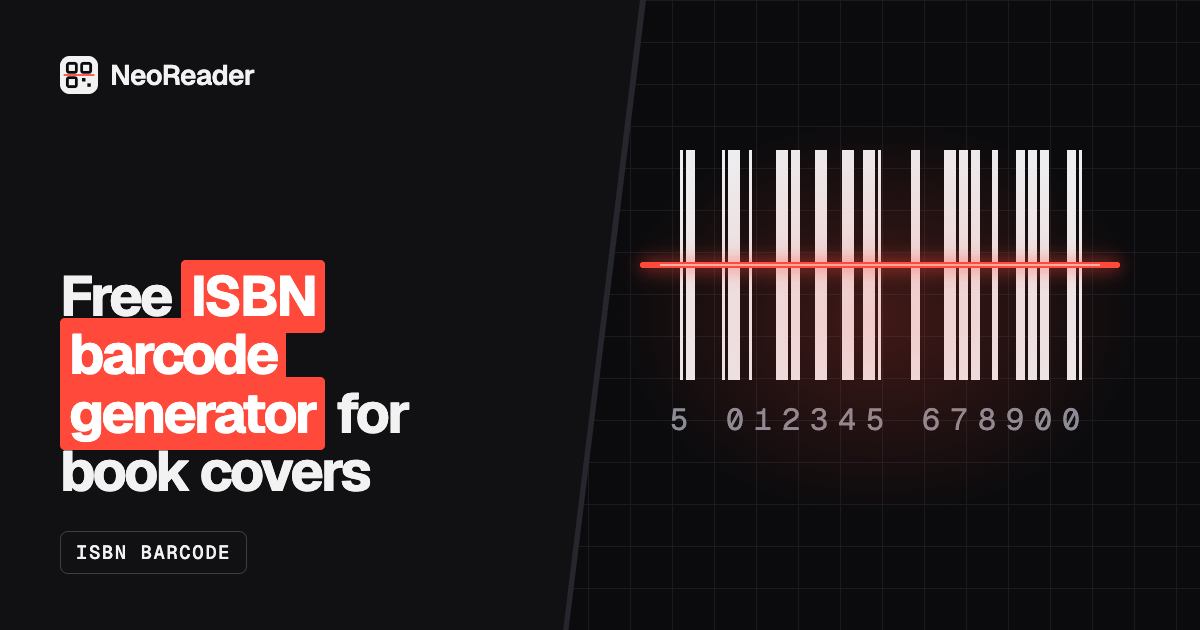
This EAN-13 barcode generator draws that number as bars, with the digits printed underneath in the standard layout. It works for any GTIN-13 you have been given.
GTIN, GS1 and EAN: which is which
- GS1 is the non-profit that runs the numbering system. Your national GS1 office licenses the numbers.
- GTIN is the number itself. GTIN-13 goes in an EAN-13, GTIN-12 in a UPC-A, GTIN-8 in an EAN-8.
- GTIN-14 marks outer cartons and is printed as an ITF-14 barcode. We have a separate ITF-14 page for that.
- EAN-13 is the barcode symbol. The older name EAN stands for European Article Number.
How to create an EAN-13 barcode
- Join your national GS1 office, or buy numbers where it sells them singly, and note your GTIN-13.
- Choose EAN-13 in the generator and type the first 12 digits.
- Check the full 13-digit number in the preview matches your GS1 record.
- Download SVG for packaging artwork, or PNG for labels and documents.
- Print at nominal size, about 37.3 mm by 25.9 mm, or between 80% and 200% of that, with white space either side.
EAN-13 printing checklist
- Use black bars on a white or pale background. Red, orange and yellow bars do not scan.
- Keep the quiet zone clear: about 11 bar widths on the left and 7 on the right.
- Do not cut the bars short. Truncated EAN-13 codes are a common reason for rejected packaging.
- Avoid seams, folds and tight curves. On a small bottle, turn the barcode so the bars run around it vertically.
- Print a proof and scan it with a phone and a till scanner before the full run.
GS1 barcode formats this tool can and cannot make
The generator makes EAN-13, EAN-8, UPC-A, UPC-E and ITF, which cover retail items and cartons. It also makes Code 128 and Data Matrix. What it does not do yet is the GS1 variants that pack several pieces of data with application identifiers, such as GS1-128, GS1 DataMatrix or GS1 QR codes. If you need a batch number and expiry date in one code for pharmacy or food traceability, you need a tool built for that.
One more point to be clear on: we do not sell or issue GTINs. A number that is not licensed to you may scan, but shops and marketplaces can reject it.